
SSND remembers a sister who traded the classroom for the capital and turned a singular conviction into a lifelong crusade for human rights.
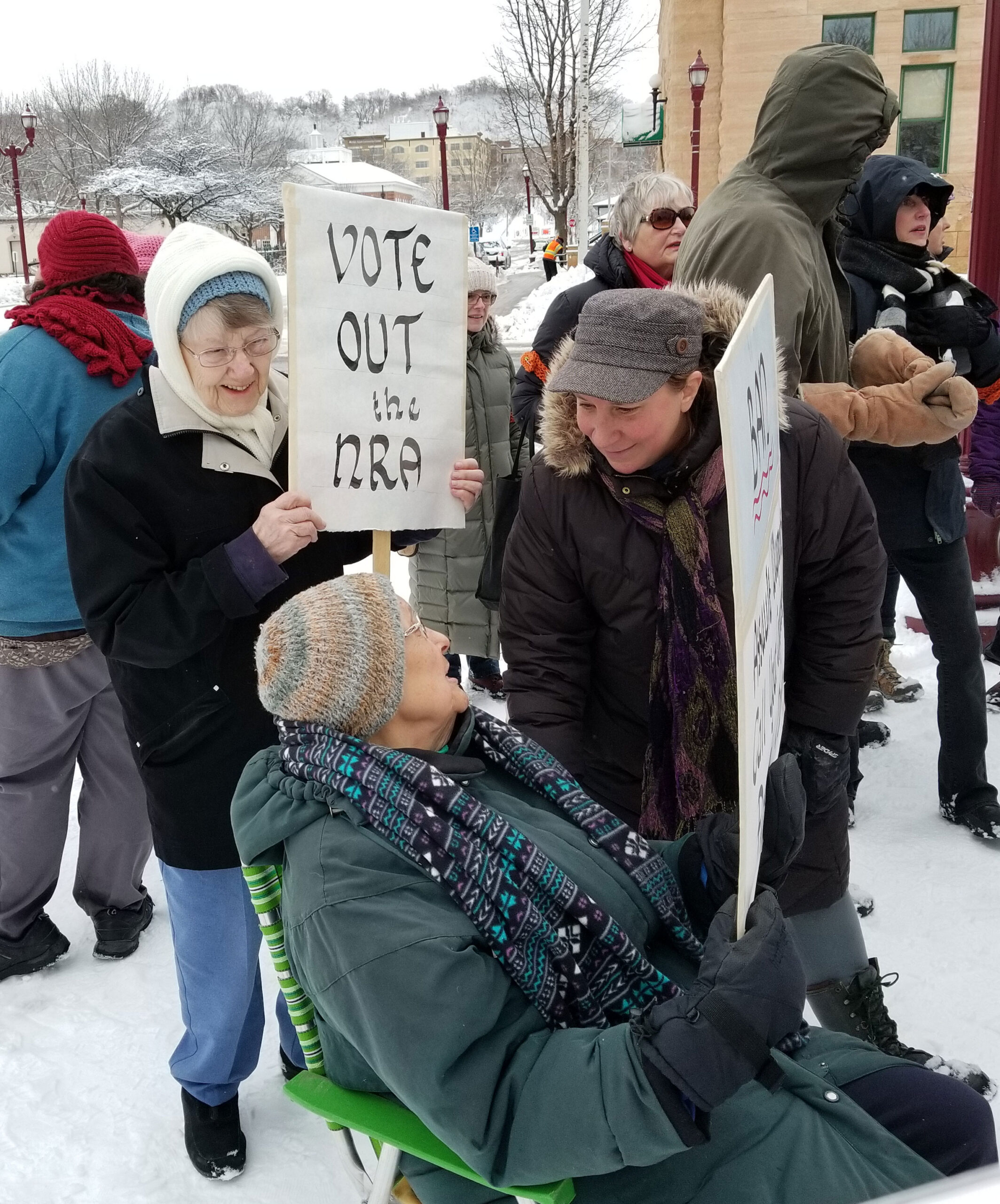 Sister Alice Zachmann, a School Sister of Notre Dame (SSND) and the founder of the Guatemala Human Rights Commission/USA, died on April 9, 2026, eleven days after her 100th birthday, in Mankato, Minnesota. In a life that spanned an entire century, she became one of the most tenacious advocates for human rights in American Catholic history.
She was born on March 29, 1926, in Albertville, Minnesota, the third of seven children in a German farming family. The hardships of her childhood—the Depression years, drought, and world war—gave her an early and intimate understanding of suffering. They also gave her something rarer: an unshakable refusal to look away from it.
 Drawn to religious life as a young woman, Alice entered SSND and professed her first vows in Mankato, Minnesota, in 1949. For more than three decades, she taught elementary school children at Catholic schools across Minnesota and Iowa. She earned a Bachelor of Arts in history and English from Mount Mary College (now University) in Milwaukee. Even as a teacher, she was never apolitical: she marched against the Vietnam War, supported the United Farm Workers in their struggle for fair wages and advocated for the elderly in St. Paul’s West Seventh neighborhood.
In 1975, a visit to Guatemala to see a fellow sister changed the course of her life. The terrible poverty she witnessed—set against the breathtaking beauty of the landscape—left her desperate to help. She began sending care packages. She organized. She prayed. And in 1981, at the end of a personal retreat, she received a call from a friend in Washington, D.C.: come and start an organization. The idea seemed, by any rational measure, impossible. Sister Alice spoke no Spanish, had no money and knew no one in the capital. She went anyway.
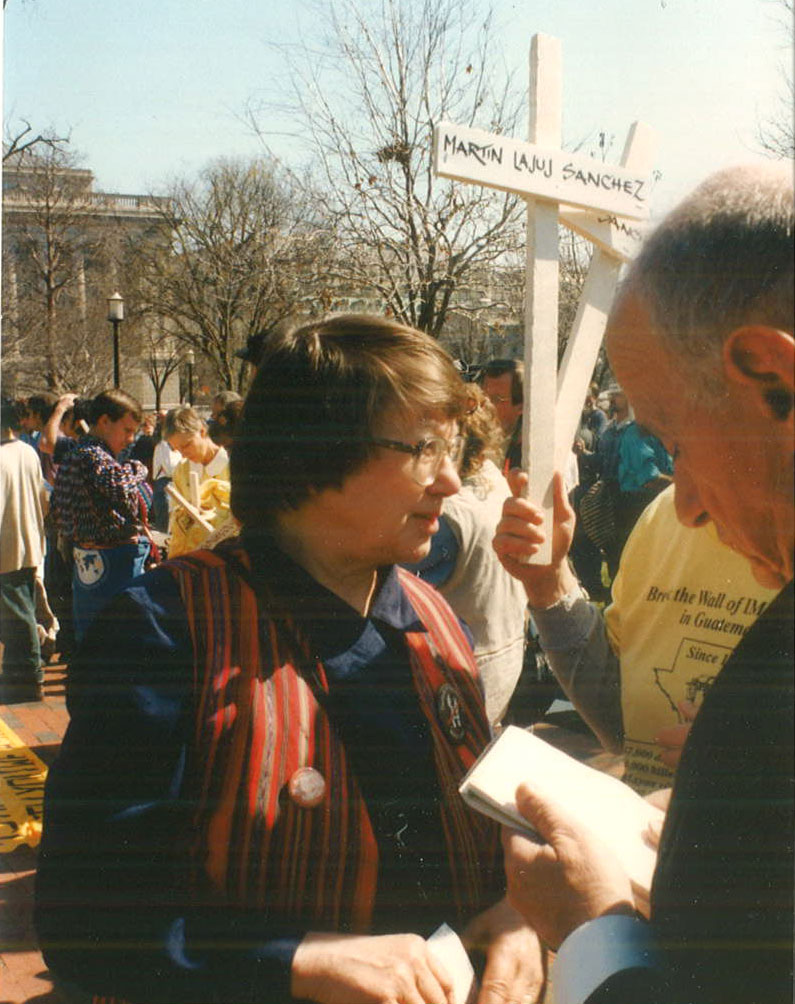
With the blessing of SSND and roughly $1,000 in hand, Sister Alice founded the Guatemala Human Rights Commission/USA in 1982, operating out of a small office at Catholic University of America. The Guatemalan army was at that moment committing massacres against Mayan Indigenous communities in a genocidal scorched-earth campaign. The Reagan administration was denying the reports. Sister Alice set about making sure the truth could not be denied. She led fact-finding delegations into the field, published weekly reports on human rights violations, organized speaking tours for Guatemalan activists, called on members of Congress, showed up at the Guatemalan embassy and supported those fleeing into exile. By June 1982, she had secured IRS nonprofit status and begun fundraising. She took no salary, living on $600 a month sent by her brother. Her work schedule for two decades was 8 a.m. to 6 p.m., dinner, then 9 p.m. to midnight.
Her work was not abstract. When Dr. Carmen Valenzuela, now a board member of GHRC, was abducted, held and tortured in Guatemala in 1990, Sister Alice fought relentlessly for her release. When Sister Dianna Ortiz, a young American sister, was secretly detained and tortured, Sister Alice mobilized networks across the country to pressure for her freedom. She spoke truth to power on every occasion and in every room she entered: congressional offices, embassies, church halls and street corners alike.

After stepping down as director of GHRC in 2002, Sister Alice joined Sister Dianna Ortiz at the Torture Abolition and Survivors Support Coalition in Washington, where for almost a decade she helped survivors of torture from around the world find housing, legal counsel and pathways to asylum. She retired to Our Lady of Good Counsel in Mankato in 2010, but retirement was not, for her, a quieting. She continued to write letters to elected officials, joined a weekly peace vigil every Wednesday at Jackson Park, advocated for affordable housing and served on the GHRC board.
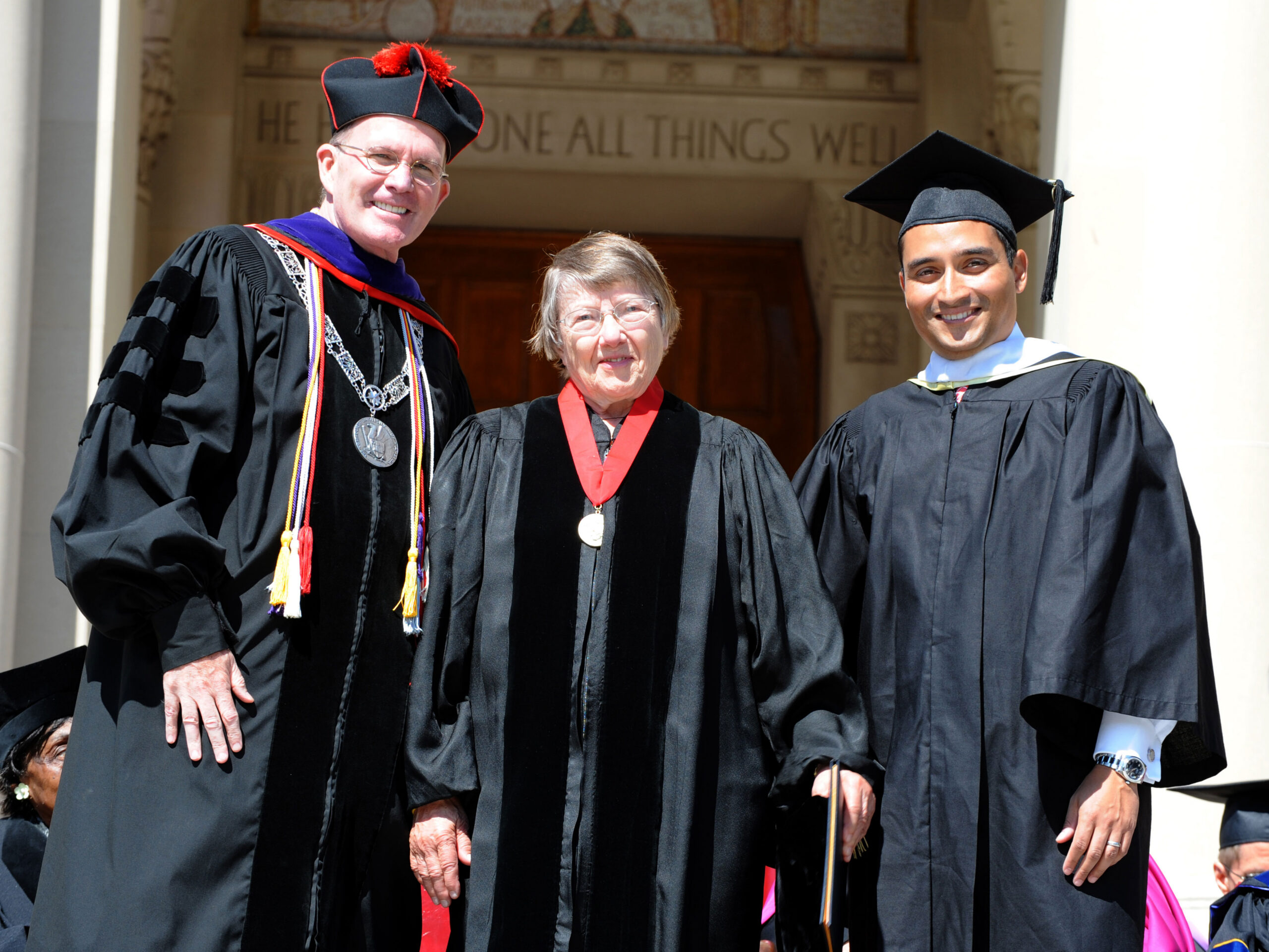
Sister Alice received nearly two dozen awards in her lifetime, including the Eleanor Roosevelt Award, the Louis B. Sohn Award and the National Women’s History Alliance Award. In 2015, she was the guest of honor of then Minnesota Rep. Tim Walz for Pope Francis’s historic address to Congress. The GHRC named its Human Rights Defenders Award in her honor.
Her mentors were Gandhi, Martin Luther King Jr., Thomas Merton and Dorothy Day. Her method was nonviolence, patience and an almost inexhaustible willingness to show up.
Sister Alice Zachmann is survived by her sisters in community, the School Sisters of Notre Dame, SSND associates, the colleagues and community of the Guatemala Human Rights Commission/USA, and the countless people around the world whose lives she touched through a lifetime of tireless, faithful, courageous work.